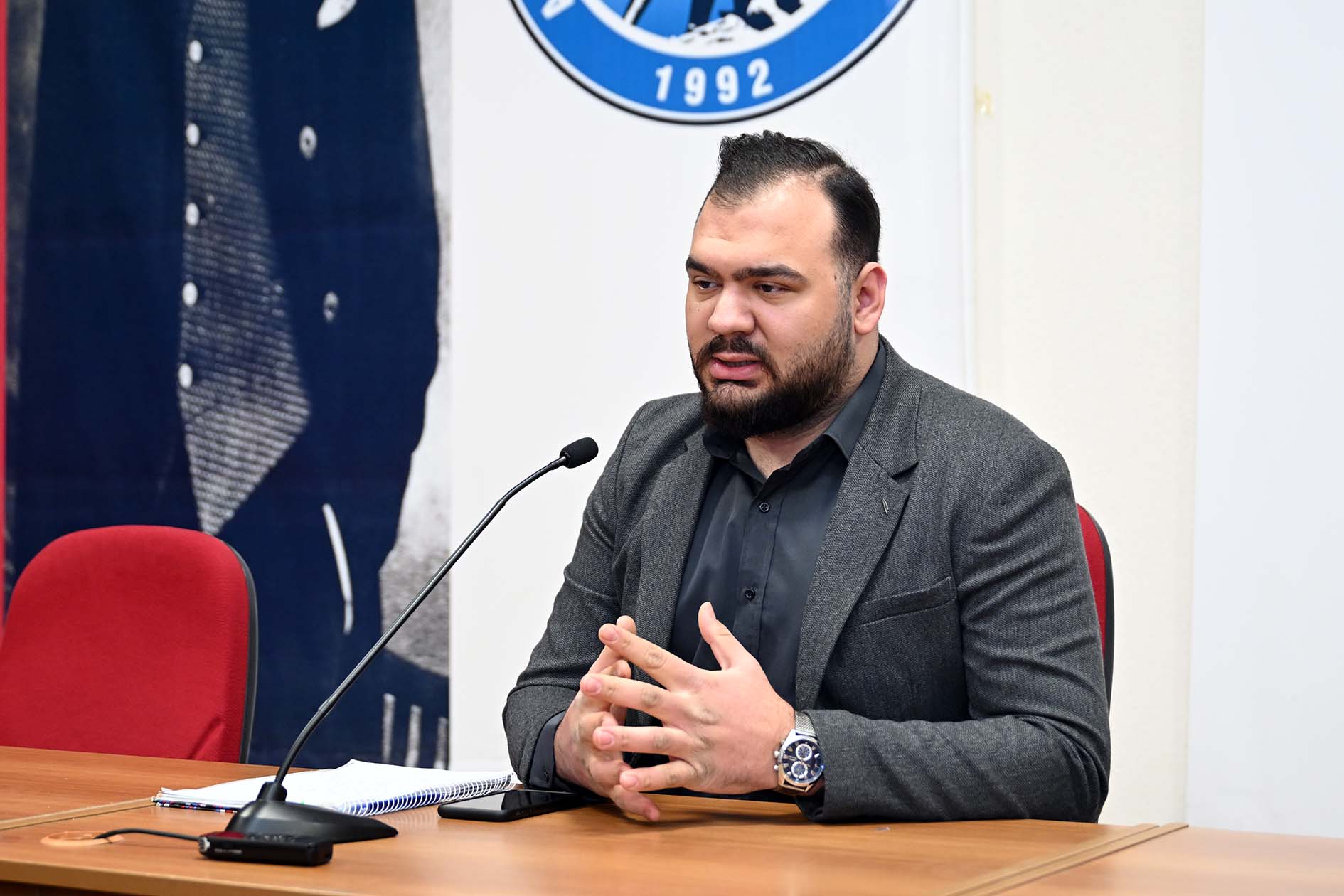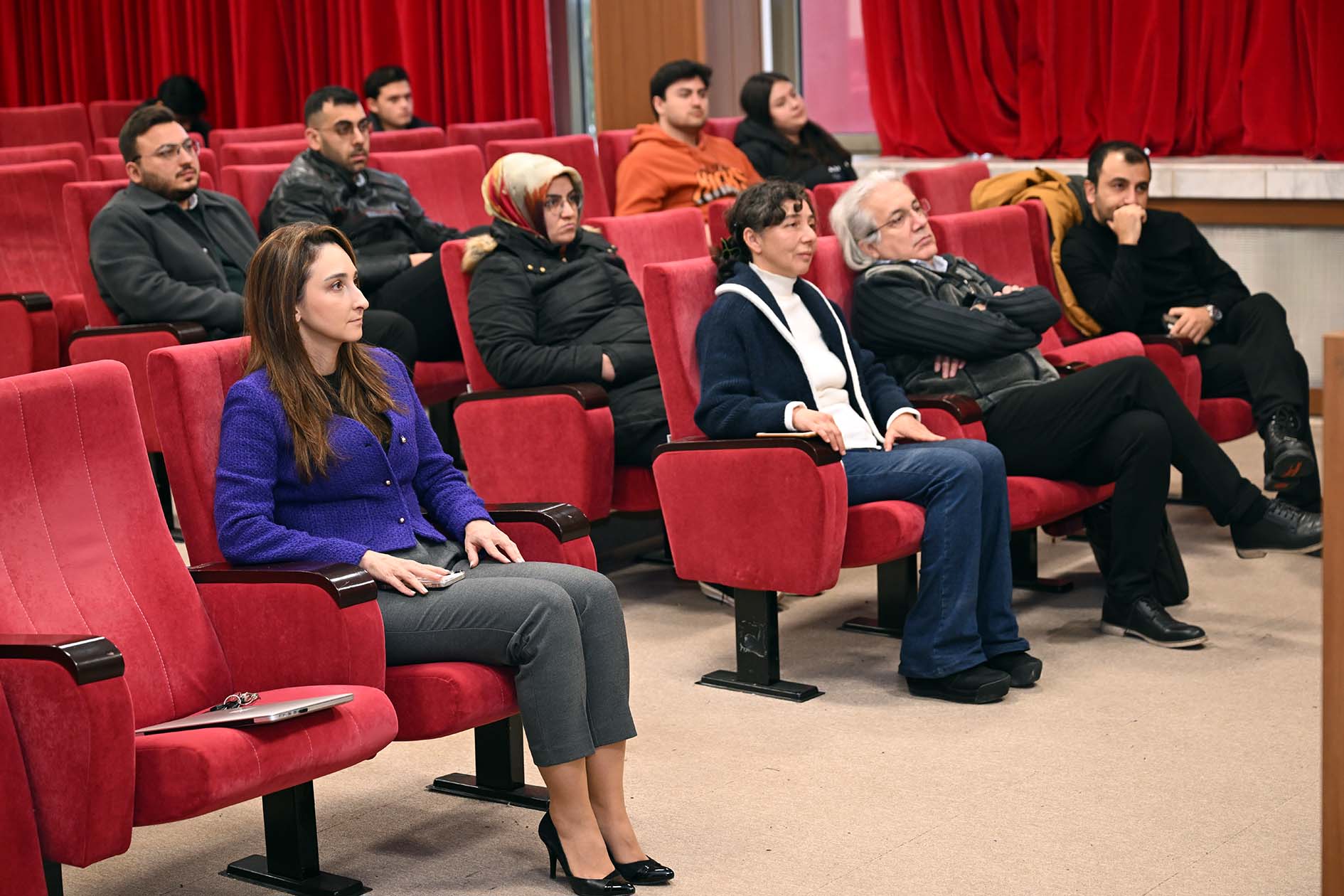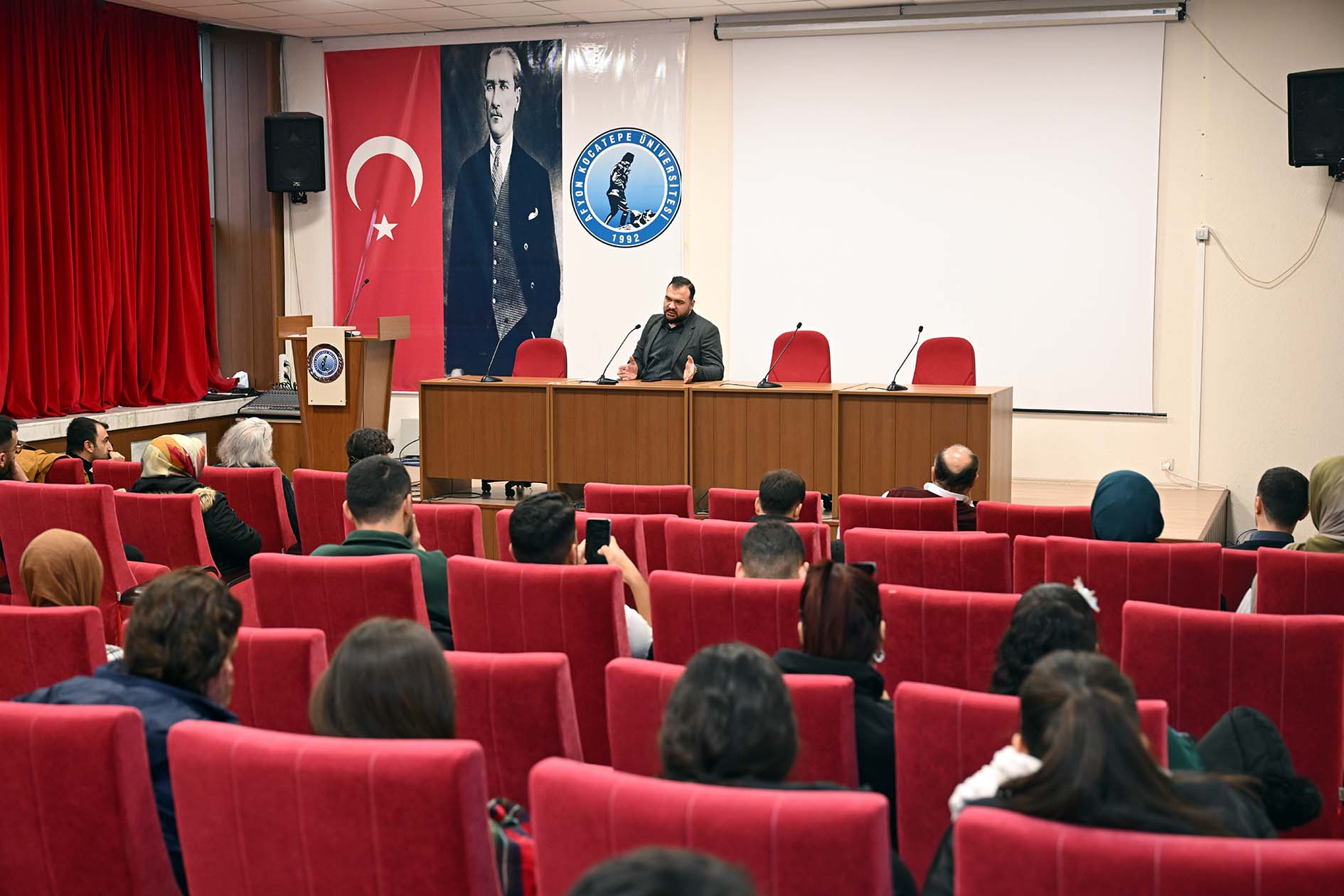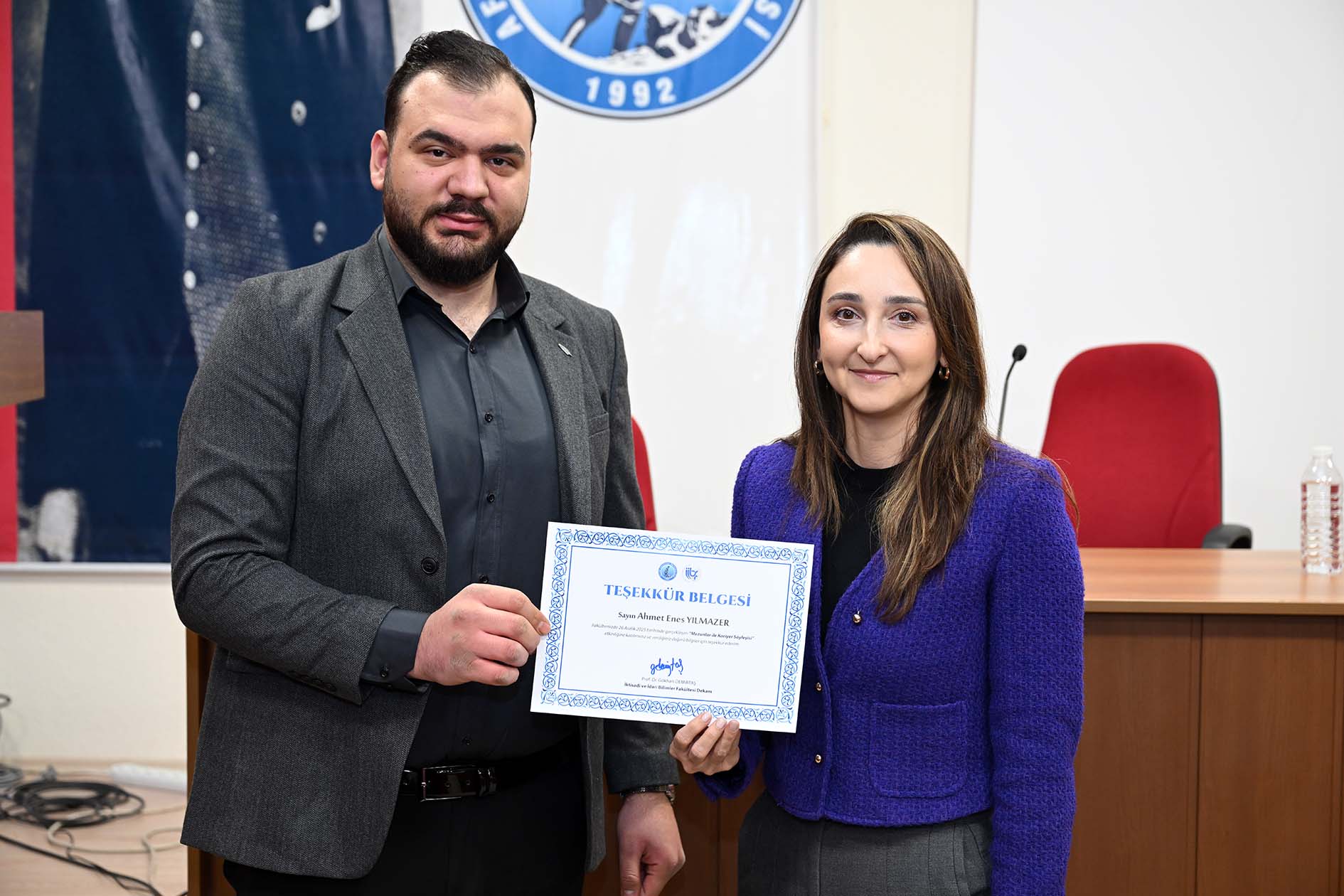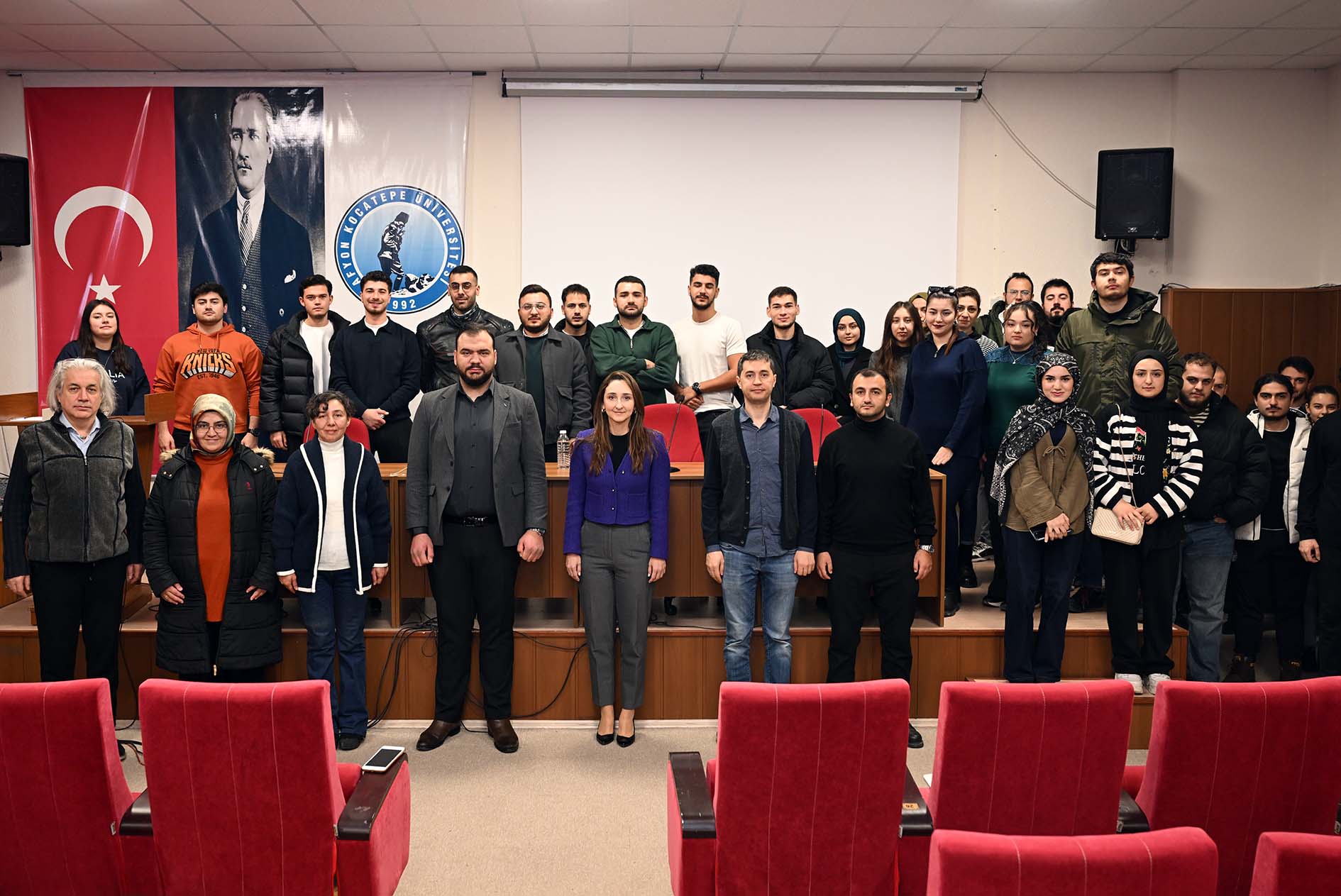

Within the scope of career talks organized by the Department of International Trade and Finance of the Faculty of Economics and Administrative Sciences (FEAS) at Afyon Kocatepe University (AKÜ), a “Career Talk” event was held on December 26 at 11:00.
The event, hosted at the Sabri Bektöre Conference Hall, was attended by Vice Dean of the Faculty of Economics and Administrative Sciences, Dr. Hale Fulya Kaya, as well as academic staff and students. The guest speaker of the “Career Talk with Alumni” event was Ahmet Enes Yılmazer, an AKÜ graduate and Domestic Distribution Channels (DDC) Operations Specialist at Mars Logistics. Yılmazer shared his professional experiences, developments in the logistics sector, and key considerations for career planning with the students. He also stated that he graduated from the Department of International Trade and Finance in 2024 and is currently pursuing a thesis-based master’s degree.
“A Master’s Degree Makes a Difference in the Private Sector”
Noting that he graduated in 2024 and is continuing his graduate education, Yılmazer discussed his transition from academic life to the business world. Emphasizing the importance of postgraduate education in the private sector, he stated that a master’s degree contributes to an employee in terms of title, salary, and professional prestige. He said:
“I understood more clearly how a master’s degree impacts the private sector and contributes to personal development once I entered professional life. This educational process creates a significant difference in terms of perspective as well as reputation in the workplace.”
“Those Who Specialize Succeed, Not Those Who Try to Do Everything”
Emphasizing that the Department of International Trade and Finance covers a broad range of fields such as foreign trade, logistics, finance, and law, Yılmazer advised students to specialize in a specific area. He stated:
“Someone who claims to know a little about everything actually does not fully master anything. One person cannot be a finance specialist, marketer, and logistics expert at the same time. You should focus on the field you are good at and passionate about, and aim to specialize in that area.”
“Student Clubs Teach Crisis Management”
Yılmazer stated that he was actively involved in student club activities during his undergraduate years and took part in organizations such as the UTF Club and İKAD, noting that these experiences provided significant advantages in job interviews and professional life.
Highlighting that experience gained beyond certificates is crucial, Yılmazer said:
“In job interviews, managers do not ask who you are; they ask what you have done and what you have achieved. Club activities allow you to meet people you would not normally have access to, strengthen your communication skills, and most importantly, teach you crisis management. Managing a crisis during an organization serves as a simulation for solving operational problems in professional life.”
“Excel Skills Give You a Competitive Advantage”
Stating that competition is intense after graduation, Yılmazer emphasized the need for students to develop their technical competencies. He noted that English proficiency has become a necessity, while knowledge of a second foreign language and technical skills create a competitive advantage. In particular, he highlighted the importance of Excel proficiency, saying:
“In reporting processes, an employee who knows Excel can complete tasks in minutes, while someone who does not may spend hours. This skill is one of the most fundamental factors that distinguishes you in an office environment.”
“Operations Cannot Be Managed Without Field Experience”
Sharing insights into the recruitment process and operational planning experiences at Mars Logistics, Yılmazer emphasized the importance of combining theoretical knowledge with practice. He pointed out the significant differences between desk work and field operations, stating:
“While theoretical knowledge forms the foundation of the job, practice is a completely different world. To truly learn the job, you need hands-on field experience. Without seeing how trucks are positioned and how loading operations are carried out on-site, operations cannot be managed solely from behind a computer. Following the principle that ‘you cannot master a job without first being an apprentice,’ it is essential to set ego aside and learn the job from the ground up.”
The event concluded with a question-and-answer session.